
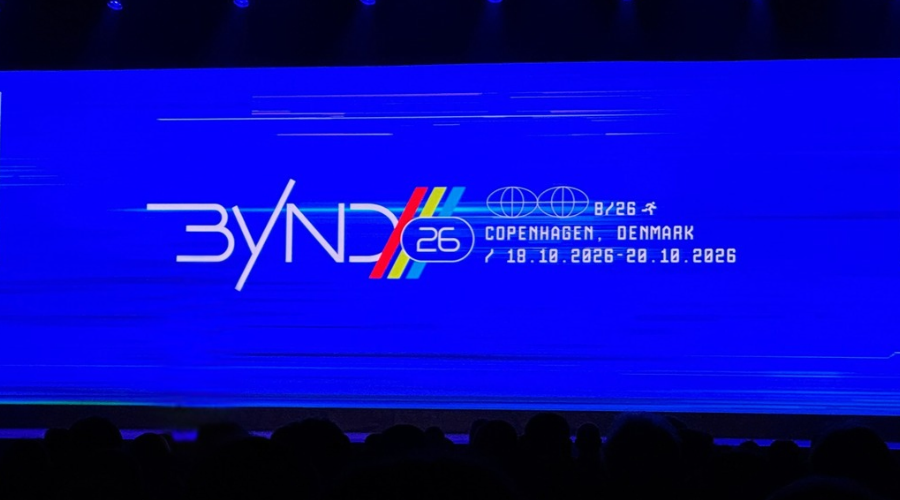
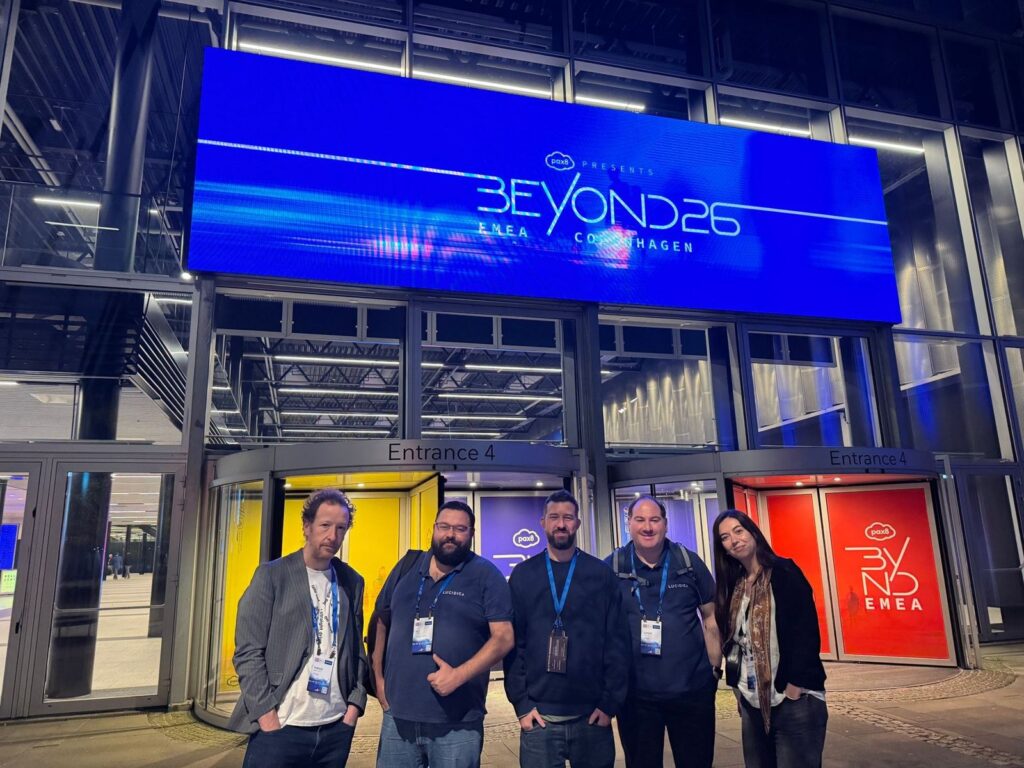
Our team recently attended Pax8 Beyond EMEA, with colleagues from both our engineering and management teams in attendance. As always, Pax8 gave us plenty to think about, from where managed IT is headed to the technologies and trends likely to shape how businesses work in the coming years.
Across the different sessions our team attended, a few themes kept coming up: AI is becoming more practical, cybersecurity and AI are becoming increasingly connected, and automation is changing both how businesses work and how MSPs support them.
Here are some of the key takeaways we brought back with us.
1. From Managed Services to Managed Intelligence
One of the strongest themes from Pax8 Beyond EMEA was the idea of moving from managed services to managed intelligence. Traditionally, an MSP might focus conversations around IT support, infrastructure, uptime or licences. But the sessions highlighted a broader role for MSPs: understanding the customer’s business challenges and identifying where technology, data, AI and automation can improve the way they work.
The important point is that AI shouldn’t be the starting point. The business problem should come first. Instead of asking, “Where can we use AI?”, businesses should look at the processes that consume the most time, involve repetitive manual work, create risk or prevent teams from focusing on higher-value activities. Only then does it make sense to decide whether AI or automation is the right solution.
2. AI Agents Are Moving Beyond the Hype
AI agents were naturally a major topic. But rather than focusing only on futuristic autonomous systems, many of the discussions looked at small, practical applications of AI that could solve specific business problems.
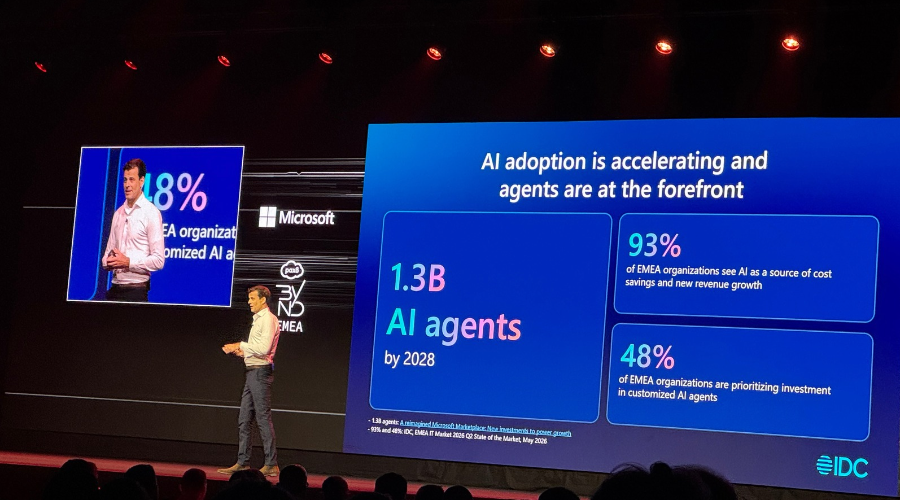
The session included examples involving organisational knowledge, SharePoint information and contract management. One example looked at using an agent to extract important contract information, such as ownership and notice periods, and make that information easier to search.
The bigger lesson wasn’t that every business needs an AI agent immediately. It was that businesses should identify specific workflows where AI could produce a measurable improvement. Successful AI projects also need clear requirements, measurable objectives and appropriate human oversight. A technically impressive demonstration is only useful if it solves the problem it was intended to solve and operates within the organisation’s agreed controls.
And the MSP’s role doesn’t necessarily end once the agent has been created. The sessions also explored ongoing requirements around monitoring, policies, permissions, integrations and governance.
3. AI and Cybersecurity
One of the most important takeaways from the event was that AI adoption and cybersecurity can no longer be treated as completely separate projects. As organisations introduce tools such as Copilot and AI agents, existing questions around data access and permissions become even more important.
For example, the Hornet Security session highlighted how overly broad permissions across Microsoft 365 can create additional concerns when introducing Copilot, because information that users can already access may become easier for them to discover. Reviewing permissions and external sharing therefore becomes an important part of preparing an organisation for AI.
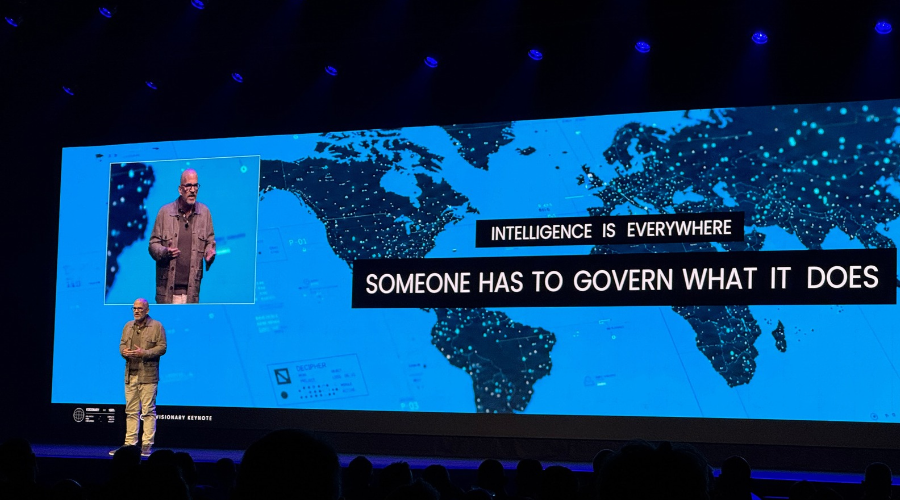
Then there is Shadow AI.
Employees may already be experimenting with publicly available or unapproved AI tools for work. That creates questions about what business information is being shared, which tools are approved and how organisations should manage AI use. The sessions discussed discovery, acceptable-use policies, governance and employee training as ways organisations can approach this challenge.
AI agents introduce another layer. The cybersecurity discussions stressed the importance of giving agents appropriately limited permissions, maintaining auditability and having mechanisms to restrict or revoke access. The message for businesses is straightforward: responsible AI adoption needs security and governance built in from the beginning.
4. Cyber Resilience Still Starts With the Fundamentals
AI may be changing cybersecurity, but Pax8 Beyond also provided a useful reminder that many of the fundamentals haven’t disappeared. Attackers can use AI to make established techniques easier to scale and harder for users to recognise. For example, the sessions discussed increasingly convincing phishing attempts, making obvious spelling and grammatical mistakes a less reliable way of identifying suspicious emails.
At the same time, technology alone doesn’t determine how successfully an organisation responds to an incident. Incident response requires clear responsibilities, communication plans, recovery priorities and an understanding of who has authority to make important decisions. Crucially, organisations also need to consider how they would communicate if normal systems such as Microsoft 365 were unavailable.
The incident-response examples captured at the event also emphasised the importance of understanding how an attacker gained access, rather than simply restoring systems and assuming the problem has disappeared. The recommendations include accessible response plans, predefined recovery priorities, evidence preservation and realistic tabletop exercises.
In other words, new threats shouldn’t distract businesses from getting the foundations right.
5. More Devices, More Cloud, More to Protect
Businesses now rely on more devices and cloud services than ever, from laptops and mobiles to Microsoft 365 and SharePoint. Using separate tools for device management, mobile devices, networks, security and backup can create fragmented workflows and additional work for IT teams. As IT environments become more complex, businesses still expect them to be managed efficiently and cost-effectively.
As more business data moves to the cloud, that complexity creates another important consideration: backup and recovery. Being in the cloud doesn’t automatically mean a business has the level of backup protection it expects.
Businesses may assume that information stored in services such as Microsoft 365 is fully protected, without considering what happens if important data is deleted, compromised or affected by ransomware.
For SMEs, the takeaway is simple: as their IT environment grows, they need visibility not only over the devices and cloud services they use, but also how the data within them is protected and recovered when something goes wrong.
What Does This Mean for Businesses?
Our biggest takeaway from Pax8 Beyond EMEA is that AI shouldn’t be adopted simply because it’s the latest technology. The real opportunity starts with understanding where a business wants to improve.
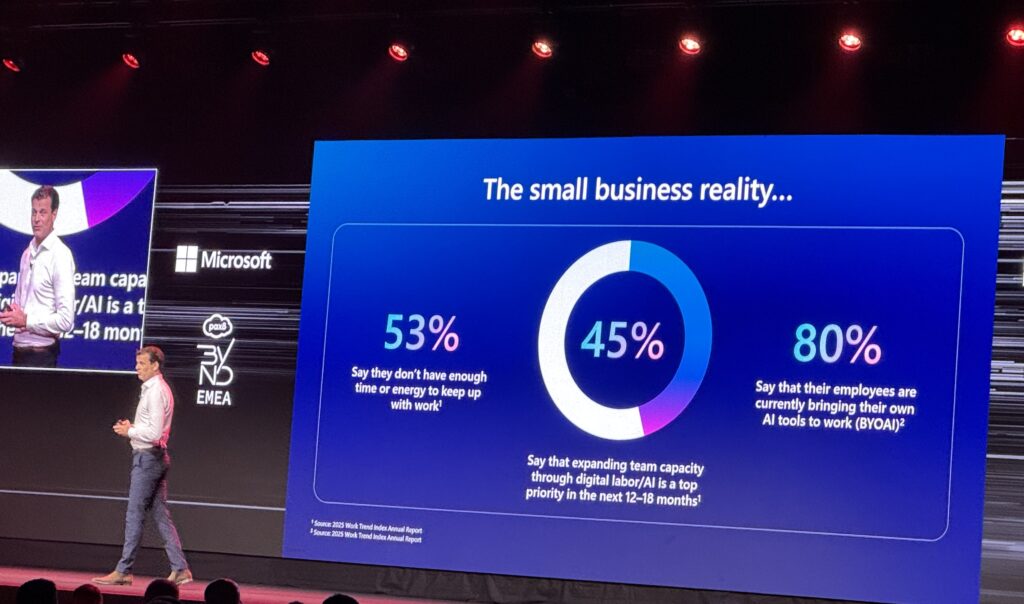
Which repetitive processes are taking up employees’ time? Where could better access to information help people make decisions? What could be automated? And importantly, are the organisation’s data, permissions and security controls ready for AI?
For MSPs like Lucidica, this represents an evolution in our role. IT support remains important, but customers increasingly need guidance around AI adoption, cybersecurity, automation, governance and how all of these areas fit together.
The technology will continue to evolve. The goal is to make sure businesses use it securely, strategically and where it can genuinely make a difference.